

What separates a project that finishes on time from one that drags on for months past the deadline? More often than not, it comes down to scheduling. Not just having a schedule, but having one that actually reflects how construction works, who’s responsible for what, and what happens when something goes wrong.
Construction scheduling is one of those disciplines that looks straightforward on the surface. A timeline, some milestones, a sequence of activities. But anyone who has spent real time on a job site knows the difference between a schedule built to win a bid and one built to run a project. The first gets filed away. The second gets used every day.
Why scheduling is more than a Gantt chart
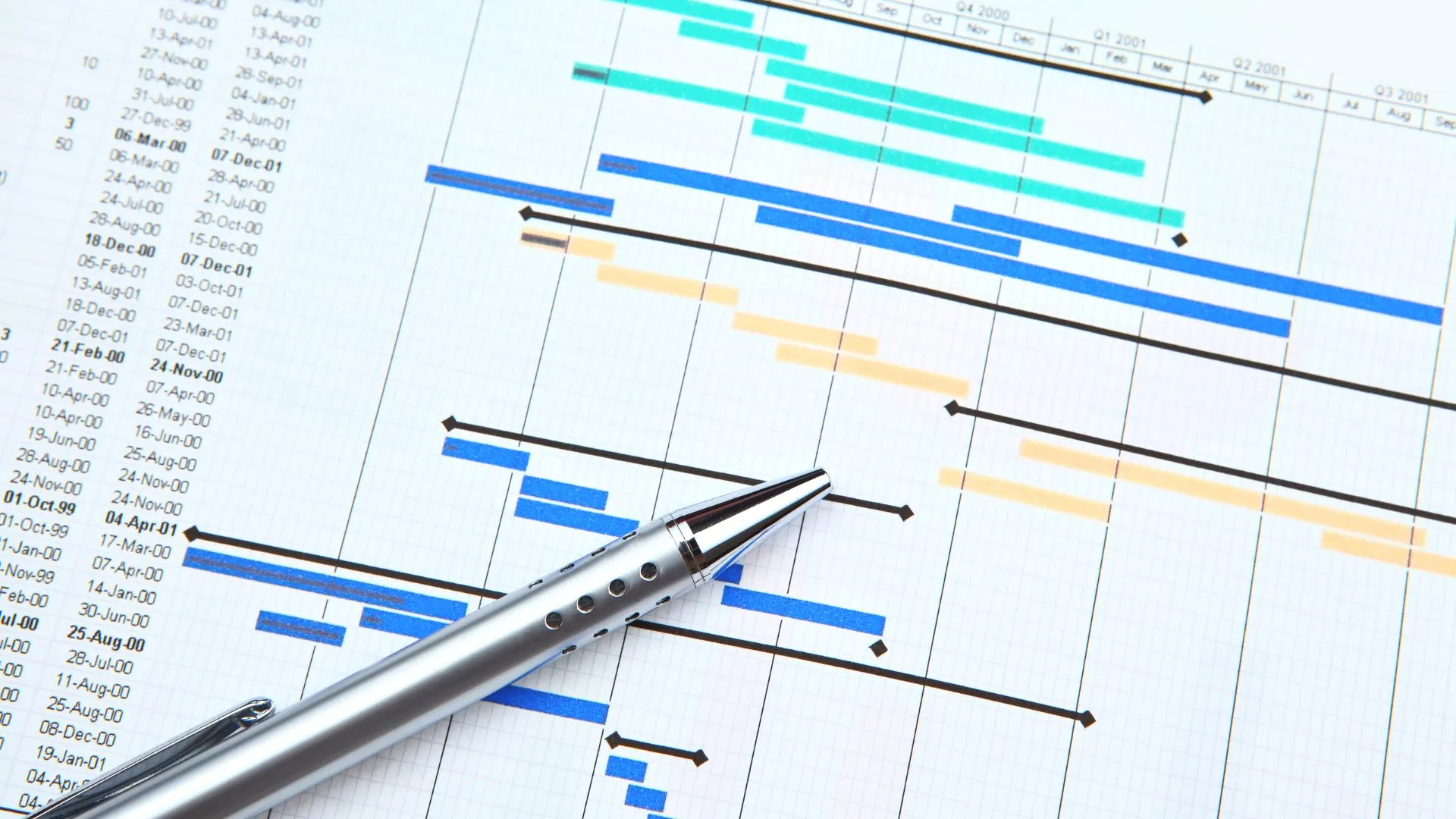
A lot of projects start with a schedule that looks complete on paper, activities lined up, durations assigned, and a projected completion date circled at the end. The problem is that many of those schedules are built in a vacuum. They don’t account for lead times on materials, the sequencing of subcontractor work, permit review windows, or the ripple effect that one delayed inspection can have on everything downstream.
That’s where professional construction scheduling services make a real difference. A well-built schedule identifies the critical path, the sequence of activities that directly controls when the project finishes. It makes dependencies visible. It creates a shared reference point that everyone on the project team can use, from the owner to the general contractor to each subcontractor on site.
When the schedule is built correctly from the start, it does more than track progress. It becomes a tool for managing risk, resolving disputes, and making decisions quickly when conditions change.
What professional scheduling actually involves

There’s a significant difference between someone generating a schedule and someone who understands construction well enough to build one that holds up throughout a project. Professional scheduling services typically include:
- Baseline schedule development that accounts for site conditions, procurement, and subcontractor workflows
- Activity sequencing and logic review to make sure dependencies reflect how work actually gets done
- Schedule updates and progress tracking throughout construction
- Delay analysis when something goes off track. Identifying causes, impacts, and who’s responsible
- Time impact analysis (TIA) for change orders or owner-directed changes
- Documentation to support claims, disputes, or contract compliance
When changes happen (and on any project of real complexity, they will), having a well-maintained schedule makes it possible to quantify the impact and work through the issue systematically rather than letting it become a dispute.
The role of software in construction scheduling
Primavera P6 has become the industry standard for complex construction scheduling, particularly on large commercial, public, and infrastructure projects. It’s capable of handling thousands of activities, multiple calendars, resource loading, and sophisticated logic that simpler tools can’t support.
But software is only as good as the person using it. A schedule built in P6 by someone who understands the construction process is a fundamentally different deliverable than one built by someone who knows the software but not the work. The tool matters, but the judgment behind it matters more.
The Swaney Corporation uses Primavera P6 for project scheduling across a wide range of project types. If your project requires detailed Primavera P6 scheduling services, that expertise is available as a standalone engagement or as part of broader construction management support.
When scheduling services are most valuable
Some owners and contractors bring in scheduling support from day one, building the baseline schedule during preconstruction and maintaining it through closeout. That’s the ideal scenario, a consistent record of the project from start to finish.
But scheduling services can also be valuable when problems have already surfaced. If a project is behind schedule, if a change order is being disputed, or if a contractor is concerned about a delay claim, a professional schedule analysis can clarify what happened, when it happened, and what the actual impact was.
In those situations, the schedule becomes evidence. Having it built and maintained by a qualified professional carries real weight, in negotiations, in mediation, and in litigation if it comes to that.
What owners and contractors often get wrong
A few patterns show up repeatedly on projects that run into scheduling trouble:
- The baseline schedule is built once and never updated
- Activities are sequenced optimistically rather than realistically
- Change orders are approved without analyzing their schedule impact
- Delays are tracked informally rather than through documented schedule updates
- The schedule doesn’t match the way subcontractors are actually sequenced
These aren’t just process failures. They can create serious exposure when a dispute arises. A schedule that hasn’t been maintained is difficult to defend, and a project without proper documentation of delays is hard to claim against.
If your project has reached that point, a scheduling and construction management expert can review the record, reconstruct what happened, and help you understand your options.
How The Swaney Corporation approaches scheduling
The Swaney Corporation & Crowe Construction Inc provides construction scheduling services for owners, developers, contractors, and legal teams across California. The work is grounded in actual construction experience (not just scheduling software), which makes a meaningful difference in how schedules are built, maintained, and used when issues arise.
Whether you’re looking for a scheduling partner from the beginning of a project or need expert support on a project that’s already in progress, the team can engage at whatever stage is most useful.
To talk through what your project needs, reach out directly. The conversation is a good starting point.
A schedule you can actually rely on
Construction scheduling is not a formality. When it’s done right, it keeps projects moving, supports good decision-making, and protects everyone involved when circumstances change. When it’s done poorly (or not done at all), the consequences tend to show up late in the project, when they’re hardest to fix.
The difference between the two comes down to who builds it and how seriously they take it.